
IPL vs Laser Hair Removal: Which Works Better, Hurts Less and Costs Less?
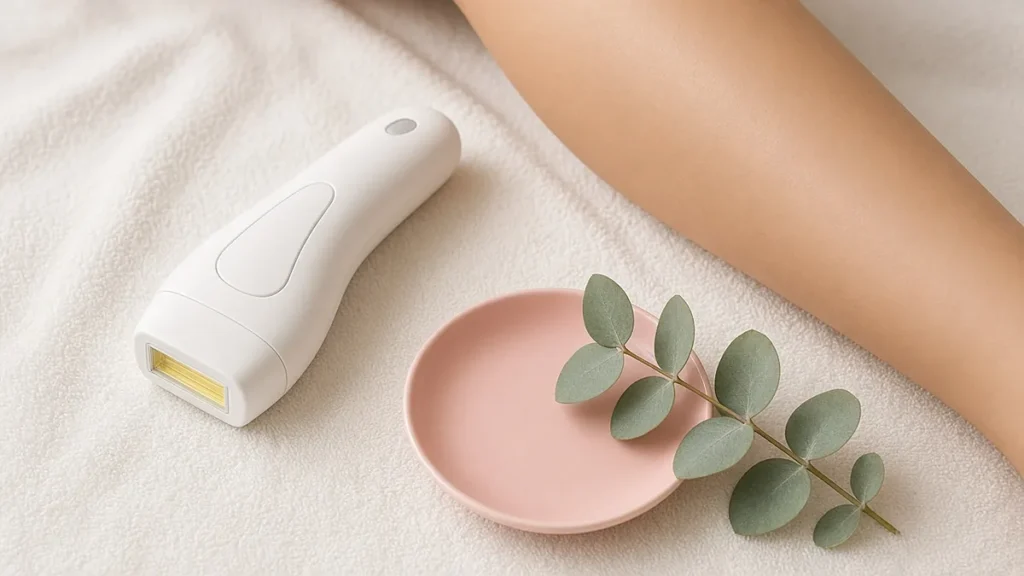
Laser hair removal is usually more effective than IPL, works on a wider range of skin tones in a dermatologist's office, and needs fewer sessions. IPL (intense pulsed light) is gentler, faster to cover large areas, and is the technology inside most at-home devices. Both reduce hair rather than remove it forever, and both work best on dark hair and lighter skin.
The best choice depends less on which technology "wins" and more on your skin tone, hair color, budget and patience. Here's how they compare, what the research shows, and how to decide.
Affiliate disclosure: As an Amazon Associate, I earn from qualifying purchases. If you buy through a product link on this page, the price is the same for you.
- How IPL and laser work
- IPL vs laser at a glance
- Which works better? What the studies show
- Is either one permanent?
- Skin tone and hair color: the deciding factor
- At-home laser vs at-home IPL
- Safety: what can go wrong
- Cost: home device vs clinic sessions
- Which should you choose?
- At-home devices worth a look
- Frequently asked questions
- Sources
How IPL and laser work
Both treatments use light to heat the pigment in the hair. That heat travels into the follicle and damages it so it grows back slower and finer, or not at all. Cleveland Clinic explains that the follicle has to be in its growth stage for this to work, which is why everyone needs several sessions (Cleveland Clinic).
The difference is the light itself:
- Laser sends a single, focused wavelength of light. Common hair removal lasers include alexandrite, diode and Nd:YAG. Because the energy is concentrated, it reaches the follicle more precisely.
- IPL sends a broad spectrum of light through filters. It covers a larger area with each flash, but the energy is spread out and less targeted.
IPL vs laser at a glance
| IPL | Laser | |
|---|---|---|
| Light | Broad spectrum, filtered | One focused wavelength |
| Where | Mostly at home, also some clinics | Mostly in clinics; small home diode lasers exist |
| Effectiveness | Good, generally a bit lower | Generally higher, especially alexandrite in studies |
| Sessions | Many: often every 2 weeks at home for the first months, then touch-ups | 2 to 6 (AAD) or 4 to 8 (Mayo Clinic), several weeks apart |
| Skin tones | Lighter to medium for most home devices | Clinic lasers can treat dark skin with the right laser and precautions |
| Pain | Usually milder | Often described as warm pinpricks or a rubber band snap |
| Cost | One device purchase | Paid per clinic session |
Which works better? What the studies show
The research favors lasers, but the gap is smaller than many clinic ads suggest.
A 2022 systematic review looked only at randomized trials that followed people for at least a full hair growth cycle. Long-term hair reduction ranged from 30% to 74% for Nd:YAG lasers, 35% to 84% for alexandrite, and 33% to 69% for diode lasers, compared with 27% to 53% for IPL. Results were best on legs and lowest on the face for every device. The authors noted that only five trials with 223 people met their criteria, so the evidence is thin (Krasniqi et al., 2022).
A 2020 meta-analysis focused on people with darker skin (Fitzpatrick types III to VI) in clinic settings. Alexandrite lasers reduced hair more than IPL, while diode and Nd:YAG lasers weren't statistically different from IPL. Nd:YAG caused less post-inflammatory darkening of the skin than IPL, and lasers tended to hurt more (Dorgham and Dorgham, 2020).
For at-home IPL specifically, I've covered the trials in detail in my guide on whether at-home IPL works. In short, home IPL devices reduced hair counts by more than half in randomized trials (home-device review, 2022).
Is either one permanent?
Not completely. Cleveland Clinic says laser hair removal isn't permanent, but results last longer than shaving or waxing, and most people need about six treatments. The American Academy of Dermatology (AAD) says that after a series of treatments, most patients don't see hair on the treated skin for months or even years, and any regrowth tends to be finer and lighter. Maintenance sessions may be needed (AAD). At-home IPL works the same way: you keep results with regular touch-ups.
Skin tone and hair color: the deciding factor
Light-based hair removal relies on contrast. Dark hair absorbs the light, and lighter skin doesn't compete for it. Cleveland Clinic notes that laser hair removal is most effective for thick, dark hair and light skin, and may not work as well for blond, gray, white or red hair. Mayo Clinic explains that red hair contains a different type of melanin that doesn't absorb enough laser energy (Mayo Clinic).
- Light to medium skin, dark hair: both IPL and laser work. Home IPL is a reasonable first try.
- Dark skin: skip most home IPL devices. The AAD says laser hair removal is now an option for dark skin but must be done very carefully by someone who knows the precautions, and it recommends a board-certified dermatologist. Mayo Clinic adds that choosing the right type of laser and settings matters for black and brown skin, and the 2020 meta-analysis found Nd:YAG lasers caused less skin darkening than IPL.
- Blond, red, gray or white hair: neither works well, because there's too little pigment. Ask a dermatologist about options; the AAD says some lasers can now treat lighter hair on light skin.
At-home laser vs at-home IPL
Most "laser" devices for home use on Amazon are actually IPL. True home lasers exist, mostly small diode lasers, and the 2022 home-device review references studies of handheld home diode lasers for hair removal.
A Cleveland Clinic dermatologist explains that both home lasers and home IPL devices remove hair, but both are less powerful than the devices in a dermatologist's office. That makes them safer for amateurs but less effective, and small treatment windows make large areas like a full leg slow to cover. She also notes that home devices only work on a narrow range of hair and skin colors, and that many have sensors that block them from flashing on darker skin (Cleveland Clinic).
Safety: what can go wrong
Both IPL and laser can cause redness, swelling, burns, blisters and skin color changes. The AAD warns that burns, permanent skin color changes and scars can happen in inexperienced hands. With home devices, the Cleveland Clinic advice is:
- Don't use them near your eyes (the upper lip is OK)
- Don't treat over tattoos, moles or other pigmented spots
- Don't use them on the genitals (the bikini line is fine)
- Follow the instructions exactly, including the skin tone chart
Mayo Clinic adds that sun exposure before or after treatment raises the risk of skin color changes, so avoid tanning and self-tanners and use a broad-spectrum SPF 30 or higher on treated areas. If you're pregnant or have a skin condition in the area, check with a dermatologist first. And if new, coarse hair is growing on your face or body, get checked: Mayo Clinic notes that hormone-related conditions can cause it, and light treatments don't treat the cause.
Cost: home device vs clinic sessions
Cleveland Clinic says professional laser sessions can cost a couple hundred dollars each, and half a dozen or more sessions can add up to more than a thousand dollars for one area, while a home device is a one-time purchase. Check whether a home device needs replacement cartridges or has limited battery life before you compare. The clinic route usually gets you there faster and works on more skin tones. The home route is cheaper per area and lets you treat many areas, but asks for months of consistent sessions.
Which should you choose?
Choose at-home IPL if you have light to medium skin and dark hair, want to treat several areas, and can commit to regular sessions for a few months.
Choose clinic laser if you have dark skin, want the fastest and strongest results, or want to treat a small area like your underarms or bikini line with as few sessions as possible.
Choose an at-home diode laser if you're in the right skin and hair range and want a laser for small areas, and you don't mind a smaller treatment window.
At-home devices worth a look
These are based on each product's Amazon listing. Check the skin tone chart for any device before you buy.
| Device | Technology | What the listing highlights | Best for |
|---|---|---|---|
| Braun Silk-expert Pro 5 (IPL5137) | IPL | Skin tone sensor adjusts each flash, 2 heads, pouch | Legs, underarms, bikini line |
| Philips Lumea 9000 | IPL | Multiple attachments for body areas, skin tone sensing, app | Treating many areas on a schedule |
| DermRays V8S Diode Laser | 810 nm diode laser | For skin tones 1 to 5, 6 energy levels, skin contact sensor, cooling; brand says FDA-cleared | Trying a true laser at home |
Braun Silk-expert Pro 5 and Philips Lumea 9000
These two are the best-known home IPL devices. The Braun Silk-expert Pro 5 listing highlights a sensor that reads your skin tone and adjusts each flash. The Philips Lumea 9000 comes with attachments shaped for different body areas and an app to keep you on schedule. Both brands' results claims come from their own studies, so treat the headline numbers as best-case.
DermRays V8S
The DermRays V8S is an 810 nm diode laser, a wavelength the brand calls the gold standard for laser hair removal. Like any home device, it's far less powerful than clinic lasers. Its listing says it's FDA-cleared, rated for skin tones 1 to 5, has six energy levels and a skin contact sensor, and doesn't require goggles. I couldn't find independent trials of this specific device, so judge it by its skin tone limits and your own patience.
Ulike Air 10 (if you hate the heat)
If the snap of heat is what keeps you from sticking with IPL, the Ulike Air 10 is built around that problem. Its sapphire contact window is chilled during use, which makes sessions feel noticeably gentler for a lot of people, and a skin sensor adjusts the output. Ulike says the device is FDA-cleared, which is a clearance, not an approval. It has the same limits as every IPL: it won't work on light blond, red, gray or white hair and isn't meant for very dark skin. Check the Ulike Air 10 (brand affiliate link).
Frequently asked questions
Is IPL as good as laser hair removal?
Not quite. In the trials reviewed, lasers produced a bit more long-term hair reduction on average. IPL still works well for many people with the right skin and hair colors, usually lighter skin and darker hair, and it's usually less painful. Neither removes hair forever, so occasional touch-ups are normal.
Which is less painful, IPL or laser?
IPL is usually milder. The AAD says laser pulses often feel like warm pinpricks or a rubber band snapping against the skin, and a 2020 meta-analysis found higher pain scores with lasers than with IPL. Starting on a lower setting at home, or asking your dermatologist about numbing cream, can make either more comfortable.
Is IPL safe for dark skin?
Most home IPL devices aren't made for dark skin, and many have sensors that won't flash on it because the risk of burns and skin color changes is higher. For dark skin, the AAD recommends laser treatment by a board-certified dermatologist who knows the right precautions and can choose a laser suited to your skin.
How many sessions do IPL and laser need?
Clinic laser usually takes 2 to 6 sessions spaced 4 to 6 weeks apart, according to the AAD. Mayo Clinic says most people need 4 to 8 treatments. At-home IPL schedules start with sessions about every 2 weeks for the first few months, then touch-ups, according to the Braun listing and Philips.
Can I switch from IPL to laser?
Yes. Many people start with home IPL and see a dermatologist for stubborn areas. Leave a gap between treatments and tell your dermatologist what you've been using and how often. Before laser, avoid tanning and skip waxing or plucking, because both treatments need the hair root in place to work.
Is at-home laser better than at-home IPL?
It's not clearly better. Both are much less powerful than clinic devices, so results are slower and usually less complete. Home lasers tend to have a smaller treatment window, so they're slower on large areas like the legs. The better choice depends on your skin tone, hair color and the areas you want to treat.
Can you do IPL and laser hair removal at the same time?
It's better not to treat the same area with both at once. Many people start with home IPL and see a dermatologist for stubborn areas later, but leave a gap between treatments and tell your dermatologist what you've been using, so they can plan sessions safely. Here's more on whether at-home IPL works.
This article is for informational purposes and doesn't replace advice from a healthcare professional.
Sources
- Laser hair removal: FAQs – American Academy of Dermatology
- Laser Hair Removal – Cleveland Clinic
- The Pros and Cons of At-Home Laser Hair Removal – Cleveland Clinic
- Laser hair removal – Mayo Clinic
- Krasniqi A et al. Efficacy of lasers and light sources in long-term hair reduction: a systematic review. J Cosmet Laser Ther, 2022 – PubMed
- Dorgham NA, Dorgham DA. Lasers for reduction of unwanted hair in skin of colour: a systematic review and meta-analysis. J Eur Acad Dermatol Venereol, 2020 – PubMed
- How often should I use my Philips Lumea? – Philips (manufacturer)
- Home-based devices in dermatology: a systematic review of safety and efficacy – PMC (NIH)
If you want to read more articles like IPL vs Laser Hair Removal: Which Works Better, Hurts Less and Costs Less?, check out the Women's Health category.