How to Stop Night Sweats in Perimenopause: Treatments That Work and How to Sleep Cooler
The treatments that reliably stop perimenopause night sweats are medical: hormone therapy is the most effective option for women who can use it, and FDA-approved nonhormone medicines such as low-dose paroxetine and fezolinetant help women who can't or would rather not take hormones. A cool bedroom, a fan, layered bedding and avoiding alcohol, spicy food and caffeine at night can make the nights more bearable, but they're comfort steps rather than cures.
Night sweats are simply hot flashes that happen while you sleep (Office on Women's Health), so everything that helps hot flashes applies here. Below I go through why they happen, how long they tend to last, what actually works, the bedroom setup I'd use while you sort out treatment, and when night sweats point to something other than perimenopause.
Affiliate disclosure: As an Amazon Associate, I earn from qualifying purchases. If you buy through a product link on this page, the price is the same for you.
- Why perimenopause causes night sweats
- How long do night sweats last?
- What actually stops night sweats
- How to sleep cooler while you sort out treatment
- Gear that makes a cooler bed easier
- When night sweats aren't perimenopause
- Frequently asked questions
- What hormone causes night sweats in perimenopause?
- How long do night sweats last in perimenopause?
- How can I reduce night sweats naturally?
- Do night sweats mean cancer?
- Do night sweats stop after menopause?
- What is the best medication for menopause night sweats?
- Why do night sweats happen in perimenopause?
- Sources
Why perimenopause causes night sweats
In your 30s and 40s, the amount of estrogen your ovaries make starts to fluctuate, and that's what perimenopause is (ACOG). Cleveland Clinic explains that estrogen and progesterone help your body control its temperature, so when they rise and fall, your body has trouble staying comfortable and responds by sweating to cool down (Cleveland Clinic).
That's why a night sweat often starts as a sudden wave of heat, then a drenching sweat, then chills once the sweat dries.
How long do night sweats last?
Longer than most of us are told. In the large SWAN study of US women, hot flashes and night sweats lasted a median of 7.4 years in total and continued for a median of 4.5 years after the final period. Women whose symptoms started early, while they were still having regular periods or in early perimenopause, had them for more than 11.8 years (Avis et al., JAMA Internal Medicine, 2015).
I share that not to scare you, but because "just wait it out" can mean the better part of a decade of broken sleep. If night sweats are wrecking your nights now, it's worth treating them now.
What actually stops night sweats
The Menopause Society's 2023 position statement on nonhormone therapy is blunt about the evidence. It recommends cognitive behavioral therapy, clinical hypnosis, SSRIs and SNRIs, gabapentin, fezolinetant, oxybutynin, weight loss and stellate ganglion block. It does not recommend cooling techniques, avoiding triggers, exercise, yoga, paced breathing, or supplements and herbal remedies as treatments, because the evidence doesn't show they work as treatments (The Menopause Society, 2023).
Here's how the main options compare:
| Option | What it is | What to know |
|---|---|---|
| Hormone therapy | Estrogen, combined with progesterone or a similar hormone if you have a uterus, as pills, patches, rings, gels or creams | NIA calls it very effective for hot flashes; risks include heart attack, stroke, blood clots and breast cancer and vary with your age and history |
| Fezolinetant (Veozah) | Once-daily nonhormone pill that works in the part of the brain that regulates body temperature | FDA-approved in 2023 for moderate to severe hot flashes; needs liver blood tests |
| Low-dose paroxetine (Brisdelle) | An SSRI antidepressant, used at a low dose for hot flashes | FDA-approved for hot flashes associated with menopause |
| Other SSRIs, SNRIs, gabapentin, oxybutynin | Medicines used off-label | Recommended by The Menopause Society; each has its own side effects |
| Cognitive behavioral therapy or clinical hypnosis | Therapy with a trained clinician, no medication | Recommended by The Menopause Society |
Hormone therapy and the risk numbers come from the National Institute on Aging, which notes that patches may be the better choice for women with heart risk factors and that risks vary with age and whether you've had a hysterectomy.
When the FDA approved fezolinetant in May 2023, it called it the first neurokinin 3 receptor antagonist approved for menopausal hot flashes (FDA). It later added a warning about rare but serious liver injury and asks doctors to check liver blood tests before prescribing it, every month for the first 3 months, and again at months 6 and 9. If you notice signs of liver problems, such as unusual tiredness, nausea, itching, light-colored stools, dark urine or yellowing of your eyes or skin, stop taking it and call your prescriber (FDA).
The right choice depends on your health history, so bring the question to your doctor directly: "My night sweats wake me up most nights. What are my options?" That sentence alone usually gets a better conversation started than waiting to be asked.
How to sleep cooler while you sort out treatment
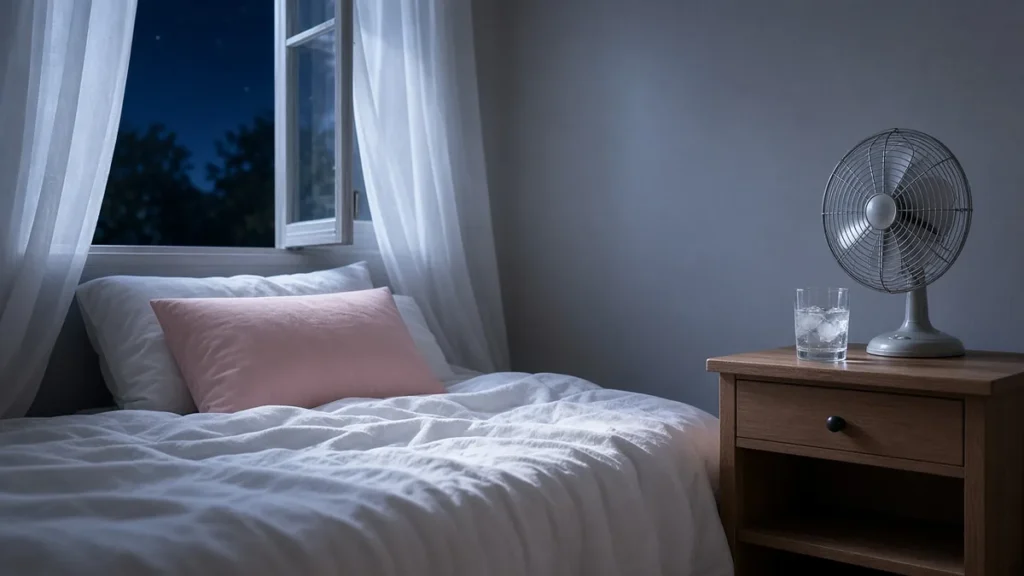
These won't stop night sweats, but they're what the NIA and Cleveland Clinic suggest to make nights easier:
- Lower the bedroom temperature, open a window or turn on the air conditioning.
- Run a fan near the bed.
- Use lightweight, layered bedding you can kick off in seconds.
- Keep a cup of cold water by the bed and take small sips before sleep.
- Wear loose, lightweight cotton or linen pajamas.
- Try pillows and mattress covers that contain cooling gel.
- Skip alcohol, spicy food and caffeine, especially in the evening.
- If you smoke, try to quit, and aim for a healthy weight, since women who are overweight tend to have more frequent and severe hot flashes.
I'd add one practical habit: keep a dry T-shirt and a spare pillowcase on your nightstand, so a 3 a.m. soak means a two-minute change instead of a full wake-up.
Gear that makes a cooler bed easier
These descriptions come from each product's Amazon listing. None of them treat night sweats.
| Product | What the listing says | Good for |
|---|---|---|
| Honeywell TurboForce Air Circulator | Small tabletop fan, 3 speeds, 90-degree pivoting head | Air moving across your face and chest all night |
| Bedsure Rayon from Bamboo Sheets | 100% rayon derived from bamboo, 4-piece queen set | Lighter sheets that feel cooler to the touch |
| Coop Home Goods Cool+ Adjustable Pillow | Shredded memory foam with cooling gel, adjustable fill | Women who wake with a hot, damp pillow |
I've written about each of these in more detail. My guide to cooling sheets for night sweats covers fabrics and what the small amount of research shows, and my guide to the cooling pillow for hot flashes explains what a pillow can and can't do.
If your night sweats came back because your estradiol patch is out of stock, don't stop or switch on your own. This guide covers which patches are still available and how women move to gel or spray with their prescriber: estradiol patch shortage: alternatives and patch-to-gel equivalents.
When night sweats aren't perimenopause
Night sweats have plenty of other causes, including medications such as antidepressants and hormone therapy, sleep apnea, an overactive thyroid, infections, anxiety, alcohol use and, less often, cancers such as lymphoma and leukemia (Mayo Clinic; Cleveland Clinic).
Mayo Clinic recommends seeing your healthcare provider if night sweats:
- Happen on a regular basis
- Interrupt your sleep
- Come with fever, weight loss, pain in a specific area, cough, diarrhea or other worrying symptoms
- Start months or years after your menopause symptoms ended
If you started a new medication around the time the sweats began, mention that too. Cleveland Clinic notes that many medicines list sweating as a side effect, and your provider may be able to adjust the dose.
Night sweats are only one piece of the picture. For the full list of symptoms, how long perimenopause lasts and where hormone therapy stands after the 2025-2026 FDA label changes, read our guide to perimenopause symptoms and HRT.
Frequently asked questions
What hormone causes night sweats in perimenopause?
Mostly estrogen, along with progesterone. During perimenopause, estrogen levels fluctuate, and Cleveland Clinic explains that these hormones help your body control its temperature. When they rise and fall, your body has trouble staying at a comfortable temperature and responds by sweating to cool down, which is what wakes you up drenched.
How long do night sweats last in perimenopause?
Often for years. In the SWAN study, hot flashes and night sweats lasted a median of 7.4 years in total and kept going a median of 4.5 years after the last period. Women whose symptoms started early in perimenopause had them for more than 11.8 years, so treating them is worth considering.
How can I reduce night sweats naturally?
Keep your bedroom cool, run a fan, use layered bedding and light cotton or linen pajamas, and sip cold water before bed. Avoid alcohol, spicy food and caffeine. These steps from NIA and Cleveland Clinic make nights easier, but The Menopause Society doesn't consider them treatments, and supplements aren't proven.
Do night sweats mean cancer?
Usually not. Menopause is a far more common cause, and medications, sleep apnea, thyroid problems and infections are also on the list. Lymphoma and leukemia can cause night sweats, though, so Mayo Clinic advises seeing a provider if they come with fever, weight loss, cough, localized pain or other worrying symptoms.
Do night sweats stop after menopause?
For most women they eventually do, but not right away. The SWAN study found they continued for a median of 4.5 years after the final period. Mayo Clinic says to see a provider if night sweats start months or years after your menopause symptoms had already ended, since that can point to another cause.
What is the best medication for menopause night sweats?
Hormone therapy is the most effective option for women who can safely use it, according to NIA. For women who can't or prefer not to, the FDA has approved low-dose paroxetine and fezolinetant, and The Menopause Society also recommends other SSRIs or SNRIs, gabapentin and oxybutynin. Your doctor can match one to your history.
Why do night sweats happen in perimenopause?
It comes down to unsteady hormones. Cleveland Clinic notes that night sweats are common in perimenopause because hormone levels change more often, and NIA adds that waking up can itself trigger hot flashes. Alcohol, spicy food, caffeine and a warm bedroom can make them worse.
This article is for informational purposes and doesn't replace advice from a healthcare professional.
Sources
- Menopause symptoms and relief – Office on Women's Health
- The Menopause Years – ACOG
- Night Sweats – Cleveland Clinic
- Hot Flashes: What Can I Do? – National Institute on Aging
- Sleep Problems and Menopause: What Can I Do? – National Institute on Aging
- Avis NE et al. Duration of Menopausal Vasomotor Symptoms Over the Menopause Transition. JAMA Intern Med, 2015 – PubMed
- The 2023 nonhormone therapy position statement of The North American Menopause Society. Menopause, 2023 – PubMed
- FDA Approves Novel Drug to Treat Moderate to Severe Hot Flashes Caused by Menopause – FDA
- FDA adds warning about rare occurrence of serious liver injury with use of Veozah – FDA
- Night sweats: Causes – Mayo Clinic
If you want to read more articles like How to Stop Night Sweats in Perimenopause: Treatments That Work and How to Sleep Cooler, check out the Women's Health category.