
How to Sleep With Period Cramps: A Bedtime Routine That Actually Helps
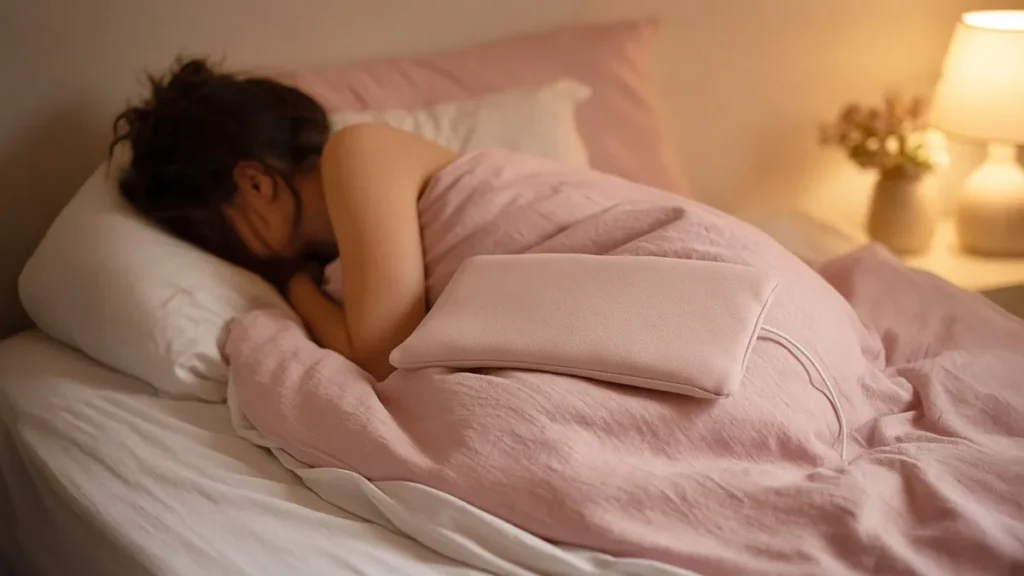
To sleep with period cramps, take an anti-inflammatory pain reliever like ibuprofen or naproxen before the pain peaks (ideally starting the day before your period), warm your belly with a bath or heating pad before bed but turn the heat off before you fall asleep, and lie on your side with your knees bent or with your legs raised on a pillow. Add overnight protection so you're not lying awake worrying about leaks.
Cramps really do wreck sleep. In a small lab study, women with painful periods had worse sleep quality, less efficient sleep and less REM sleep on nights with cramps than on pain-free nights (Baker et al., 1999). In another study of 89 women, the more severe their period pain, the more severe their insomnia, and severe cramps meant taking longer to fall asleep (Woosley and Lichstein, 2014). Here's the bedtime routine I'd use, step by step.
Affiliate disclosure: As an Amazon Associate, I earn from qualifying purchases. If you buy through a product link on this page, the price is the same for you.
1. Time your pain reliever
This is the step that makes the biggest difference, and the one most people get wrong by waiting until the pain is bad.
Cramps come from prostaglandins, chemicals made in the lining of the uterus that make its muscles contract. NSAIDs such as ibuprofen and naproxen lower the prostaglandins your body makes, and ACOG says they work best taken at the first sign of your period or pain. MedlinePlus goes a step further and suggests starting the day before your period is expected, then taking it regularly for the first few days.
For sleep, that means not skipping your evening dose on cramp days. Follow the label for timing and the maximum daily amount. ACOG notes that people with bleeding disorders, asthma, aspirin allergy, liver damage, stomach disorders or ulcers shouldn't take NSAIDs, so check with your doctor if any of those apply.
2. Use heat before bed, not during sleep
Heat is one of the best-supported home remedies for cramps, and a warm bath, a heating pad or a hot water bottle on your belly are all on ACOG's list. The catch is timing. Kaiser Permanente advises against using heat while you're sleeping and against falling asleep with an electric heating pad on (Kaiser Permanente), and MedlinePlus says never to fall asleep with a heating pad on.
So I treat heat as a pre-bed ritual:
- Take a warm shower or bath about an hour before bed.
- Use a heating pad on low or a covered hot water bottle on your lower belly while you read or wind down.
- When you feel drowsy, switch the pad off and set it aside, or move the bottle off your body.
A pad with an auto shut-off is a good backup in case you doze off anyway. My guide to using a heating pad for period cramps covers safe times and settings, and if you're deciding between the two, here's my comparison of a hot water bottle vs heating pad.
3. Pick a position that takes pressure off
MedlinePlus suggests keeping your legs raised while lying down, or lying on your side with your knees bent (MedlinePlus). In practice, that gives you two options:
- On your side, knees bent. This is the curled "fetal" position. A pillow between your knees keeps your hips level, which helps if cramps spread to your lower back.
- On your back, legs raised. Put a pillow or two under your knees or calves.
I haven't found any study comparing sleep positions for cramps, so try both and go with whichever feels easier. Before you settle in, a few minutes of light circular massage on your lower belly, another MedlinePlus suggestion, can help you relax.
4. Stop worrying about leaks
Part of what keeps people awake on heavy nights is listening to every shift and wondering whether they've leaked. Overnight protection that covers more area takes that off your mind.
| Product | What the listing says | Good for |
|---|---|---|
| Always ZZZ Overnight Disposable Period Underwear | 360-degree coverage; the brand says it absorbs as much as 5 ultra-thin overnight pads or tampons | Heavy first nights, travel, no washing |
| Pure Enrichment PureRelief XL Heating Pad | 12 x 24 inches, 6 heat settings, auto shut-off | Warming your belly before bed |
| Attmu 2L Hot Water Bottle with Knit Cover | Rubber bottle with a knit cover; fill no more than two-thirds, no microwave | Cord-free warmth while you wind down |
These descriptions come from each product's Amazon listing. If you'd rather use reusable underwear, my guide to period underwear for heavy flow covers how to pair it with a tampon, cup or disc, and which signs suggest your bleeding is heavier than normal.
5. Set up the rest of your night
A few small habits help on cramp nights:
- Keep a glass of water and your pain reliever by the bed, so if you wake up at 3 a.m. you're not hunting for them in the dark.
- Keep the room comfortable. Women with painful periods in the Baker study had higher body temperatures at night, so a slightly cooler room and light layers may feel better.
- Move during the day. ACOG says exercising most days can help, because aerobic activity helps produce chemicals that block pain, and MedlinePlus suggests walking and pelvic rocking.
- Have a plan for waking up. If cramps wake you, take your next dose if it's due, use a few minutes of warmth while you're awake, then put it away before you go back to sleep.
When cramps that keep you up need a doctor
If cramps keep you awake every month even with an NSAID and heat, that's worth a visit. Your doctor can talk with you about hormonal birth control, which reduces cramps for many people (Mayo Clinic), or look for a cause such as endometriosis or fibroids (ACOG).
MedlinePlus recommends contacting your provider if treatments don't relieve your pain after 3 months, if you pass blood clots or have other symptoms with the pain, or if the pain begins more than 5 days before your period or continues after it. Get care right away for fever with pelvic pain, foul-smelling discharge, or sudden, severe pain, especially if your period is more than a week late and you've been sexually active (MedlinePlus).
Frequently asked questions
What is the best position to sleep with period cramps?
MedlinePlus suggests lying on your side with your knees bent, or on your back with your legs raised. A pillow between your knees in the first position, or under your knees in the second, can make it more comfortable. No study has compared positions head to head, so try both and keep whichever eases your pain.
Why are period cramps worse at night?
I couldn't find research that explains it directly. What studies do show is that cramps disrupt sleep: women with painful periods had worse sleep quality and less REM sleep on cramp nights. If your last pain reliever was in the afternoon, it may have worn off by bedtime, so keeping to the label's schedule can help.
Can period cramps wake you up at night?
Yes. In a lab study, women with painful periods slept less efficiently and had less REM sleep on nights with cramps than on pain-free nights. Another study of 89 women linked more severe cramps to more severe insomnia. Starting an NSAID the day before your period may keep the pain lower overnight.
How can I fall asleep with period cramps?
Take an NSAID such as ibuprofen before bed if it suits you, have a warm bath or use heat while you wind down, then turn the heat off. Lie on your side with your knees bent. Keep the room comfortable and your next dose by the bed, so waking up doesn't turn into an hour awake.
How do I sleep on my period without leaking?
Choose protection built for overnight wear, such as disposable period underwear with full coverage or an overnight pad paired with period underwear as backup. Change right before bed so you start fresh. If you bleed through a pad or tampon every one to two hours, the Office on Women's Health says to call your doctor.
How do I sleep with period cramps and back pain?
Lie on your side with your knees bent and a pillow between them, which keeps your hips and lower back aligned. Before bed, put heat on your lower back as well as your belly, then turn it off. Mayo Clinic notes that cramp pain can radiate to the lower back, but see a doctor if it's severe or new.
This article is for informational purposes and doesn't replace advice from a healthcare professional.
Sources
- Baker FC et al. High nocturnal body temperatures and disturbed sleep in women with primary dysmenorrhea. Am J Physiol, 1999 – PubMed
- Woosley JA, Lichstein KL. Dysmenorrhea, the menstrual cycle, and sleep. Behav Med, 2014 – PubMed
- Dysmenorrhea: Painful Periods – ACOG
- Painful menstrual periods – MedlinePlus
- Period problems – Office on Women's Health
- Menstrual cramps: Symptoms and causes – Mayo Clinic
- Using Cold and Heat Therapies – Kaiser Permanente
- Menstrual cramps: Diagnosis and treatment – Mayo Clinic
If you want to read more articles like How to Sleep With Period Cramps: A Bedtime Routine That Actually Helps, check out the Women's Health category.