
Laser Hair Removal Cost Per Session vs At-Home IPL: How to Work Out What You'll Really Pay
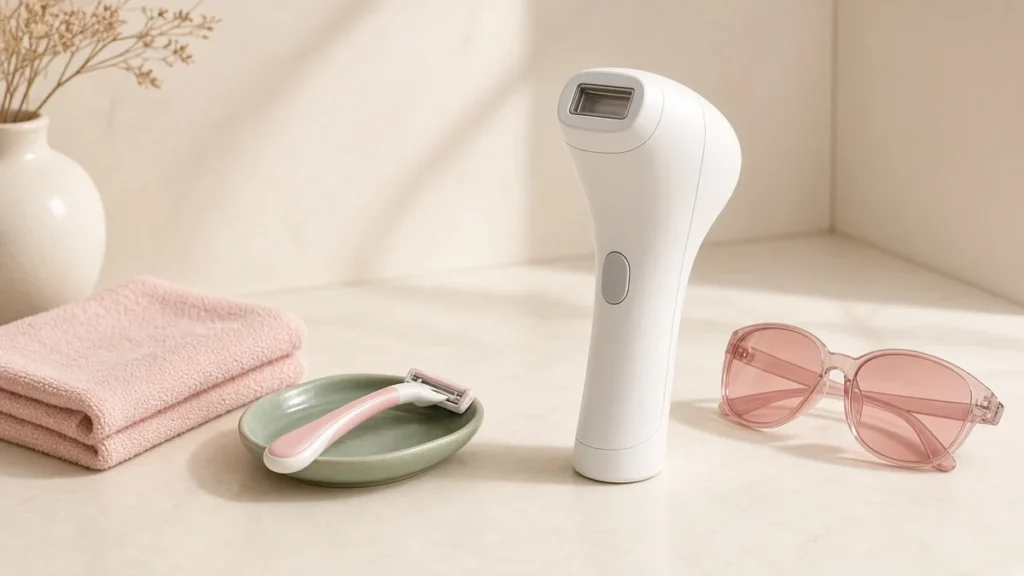
Laser hair removal cost per session depends on the body area, your city and who does it, so a single price you read online won't tell you much. What you can pin down: the American Society of Plastic Surgeons puts the average cost of laser skin treatments like hair removal at $697, most people need 4 to 8 sessions, and an at-home IPL device is a one-time purchase that works more slowly. Below is how to turn a clinic quote into a real total, and how to tell which option fits your skin, your hair and your budget.
We checked every number here against Mayo Clinic, the American Academy of Dermatology (AAD), the ASPS, FDA clearance documents and published studies on November 2, 2026. We don't quote device prices because they change every week.
- Quick answer
- What drives the cost per session
- How many sessions you need
- How to work out your real total: clinic vs at-home IPL
- Clinic laser vs at-home IPL: what the studies show
- Skin tone and hair color: who each option suits
- Safety and side effects
- Who should skip at-home IPL
- When to see a dermatologist
- At-home IPL devices worth a look
- Frequently asked questions
- How much does laser hair removal cost per session?
- How many sessions of laser hair removal do I need?
- Is at-home IPL as effective as professional laser?
- Does laser or IPL work on dark skin?
- Will laser or IPL work on blonde or red hair?
- Is laser hair removal permanent?
- What are the side effects of laser hair removal?
- Can I use at-home IPL if I have a tan?
- Does insurance or an FSA pay for laser hair removal?
- Should I see a dermatologist before laser or IPL?
- Sources
Quick answer
- Average clinic cost: $697 for laser skin treatments like hair removal (ASPS). That average leaves out related costs, and small areas usually cost less than large ones.
- Sessions: 4 to 8 for most people (Mayo Clinic), or 2 to 6 according to the AAD, every 4 to 6 weeks.
- Results: about 10% to 25% less hair after the first clinic session (AAD). Hair may come back over time, often finer.
- Home IPL: you pay once, but it takes longer and needs regular touch-ups. In one small study it removed about half the underarm hair a clinic laser did.
- Who it suits: dark hair works best. Neither option works well on blonde, red, gray or white hair, and most home devices aren't meant for dark brown to dark skin.
- Insurance: cosmetic hair removal isn't covered (AAD).
What drives the cost per session
The ASPS says prices depend on the experience of the person treating you, the type of laser, how long the area takes and where the office is. In practice that means:
- Body area. Mayo Clinic notes a small area like the upper lip can take only minutes, while a back can take an hour or longer. Longer sessions cost more.
- Who treats you. A dermatology office and a med spa can quote very different prices. The AAD recommends a board-certified dermatologist or treatment under one's direct supervision, because burns, scars and lasting color changes are more likely in inexperienced hands.
- Your skin tone. Darker skin needs the right type of laser and settings, so choose a clinic with experience treating skin like yours, even if it costs more.
- Location. Big-city prices tend to run higher.
- Packages. Many clinics sell a set of sessions. Compare the full-series price, not the cheapest single visit.
The ASPS average also leaves out related costs. Ask whether the quote includes the consultation, numbing cream and touch-up visits.
How many sessions you need
Lasers and IPL only damage follicles that are actively growing, and at any moment only some of your hairs are. That's why you need a series of sessions spaced weeks apart.
| Source | Sessions | Spacing | What to expect |
|---|---|---|---|
| Mayo Clinic | 4 to 8 for best results | Several weeks apart | Occasional follow-ups may be needed |
| American Academy of Dermatology (FAQs) | 2 to 6 for most patients | Every 4 to 6 weeks | 10% to 25% less hair after the first session |
| American Academy of Dermatology (overview) | 6 or more | Not permanent on a woman’s face, because of hormones | |
| AAD on home devices | Many more uses than in a clinic | Ongoing | Periodic use needed to keep results |
If your extra hair is driven by hormones, as with polycystic ovary syndrome, Mayo Clinic notes new hair can keep growing, so plan for ongoing treatment and get the cause checked.
How to work out your real total: clinic vs at-home IPL
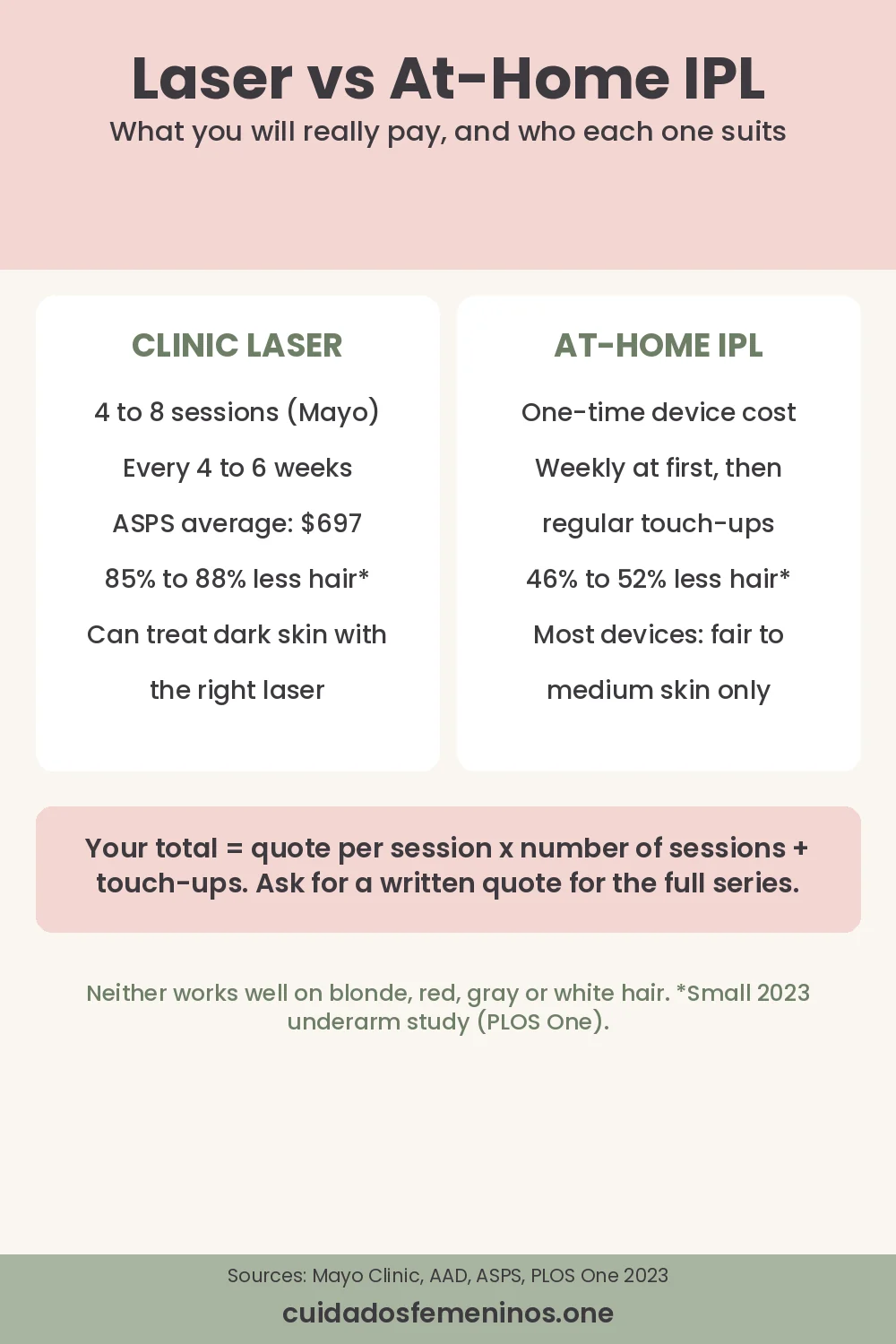
Ask each clinic for a written quote per session for the area you want, then use this simple math. The example numbers below are only an illustration of the calculation, not a market price.
| Step | Clinic laser | At-home IPL |
|---|---|---|
| 1. Price | Quote per session for your area | One-time device price (check the current listing) |
| 2. Sessions | Multiply by 4 to 8 (Mayo) or the number in the clinic plan | No per-session fee |
| 3. Touch-ups | Add 1 or 2 maintenance visits a year if the clinic expects them | Keep using it regularly, as the manual directs |
| 4. Extras | Consultation, numbing cream, travel and time off | Your time: you do every session yourself |
| Example | A $150 quote x 6 sessions = $900, plus touch-ups | The device price, used on several areas |
A few things tend to tip the math:
- One small area (underarms, upper lip): a clinic series may cost not much more than a good device, and clinic lasers removed more hair in head-to-head testing.
- Several or large areas (full legs plus bikini plus underarms): one home device covers all of them, so it usually wins on cost if your skin and hair suit IPL.
- Dark skin or light hair: the cheapest option is the one that actually works. For dark skin that usually means a clinic with the right laser; for blonde, red or gray hair, neither option is likely to pay off.
Clinic laser vs at-home IPL: what the studies show
In a 2023 study published in PLOS One, women had six underarm treatments with either a clinic diode laser or a home-use light device. The clinic laser reduced hair by 85% on one side and 88% on the other. The home device reduced it by 52% and 46%. Both caused only mild side effects. The study was small (15 women finished), so treat the numbers as a rough guide, not a promise.
A 2023 network meta-analysis of 13 randomized trials found lasers and IPL safe and effective, with only temporary side effects, but said longer studies are needed to know which works best over time. The AAD's practical advice matches: home devices need to be used for much longer to see results, and periodically to keep them.
For a deeper look at the technology, see our guides on IPL vs laser hair removal and whether at-home IPL actually works.
Skin tone and hair color: who each option suits
Both methods aim light at the pigment in the hair, which turns into heat and damages the follicle. Mayo Clinic says results are best with clear contrast, such as dark hair on light skin.
| Your hair and skin | Clinic laser | At-home IPL |
|---|---|---|
| Dark hair, fair to medium skin | Good candidate | Good candidate for most devices |
| Dark hair, brown or black skin | Can work with an experienced professional and the right laser and settings (Mayo) | Most devices exclude dark brown to dark skin (Philips Lumea, for example) |
| Blonde, white or gray hair | Poor results (Mayo, AAD) | Poor results |
| Red hair | Poor results: its melanin type doesn’t absorb enough energy (Mayo) | Poor results |
| Recent tan or self-tanner | Wait until it fades completely (AAD) | Wait; follow the manual |
Philips, for example, says its Lumea IPL suits naturally dark blond, dark brown or black hair on fair to medium brown skin, and isn't suitable for light blond, red, gray or white hair or for dark brown to dark skin. Every home device has its own skin tone chart, so read it before you buy.
Safety and side effects
Mayo Clinic and the AAD list the same common effects: redness, swelling and discomfort that usually fade within hours to a few days. Treated skin can darken or lighten. This is usually temporary but can last, and the risk is higher on black or brown skin and when you don't avoid the sun before and after. Less common: blistering, crusting, scarring, infection, changes in skin texture and cold sore flares. Rarely, hair grows thicker around the treated area.
- Never treat eyelids, eyebrows or the skin around them; there's a risk of serious eye injury (Mayo Clinic). Clinics give you protective eyewear.
- Don't treat over tattoos (Mayo Clinic).
- Stop waxing, plucking or electrolysis at least four weeks before treatment, and shave the day before (Mayo Clinic).
- Protect treated skin from the sun with SPF 30 or higher (Mayo Clinic).
Who should skip at-home IPL
- Your skin is darker than the device's approved range.
- Your hair is light blond, red, gray or white.
- You have a fresh tan or self-tanner on the area.
- You have tattoos, permanent makeup or moles in the area (skip those spots).
- You have an infection, wound or rash on the skin you want to treat.
- You take a medicine that makes you sensitive to light, or recently took isotretinoin. Ask your doctor first.
- You're pregnant: many manufacturers tell you not to use their devices, so check your manual.
When to see a dermatologist
- Before any treatment if you have brown or black skin, scar easily, have had keloids or get cold sores (the AAD lists all of these as things to tell your dermatologist).
- If you have new or fast-growing hair on your face, chest or belly, which can point to a hormone problem that needs testing.
- If you get blisters, burns, signs of infection or color changes that don't fade after laser or IPL.
- If you're not sure your skin and hair are a match for a home device before you spend the money.
At-home IPL devices worth a look
Affiliate disclosure: As an Amazon Associate, I earn from qualifying purchases. I may also earn from some brand partner links. If you buy through a product link on this page, the price is the same for you. Read the full disclosure.
These three brands are widely sold in the US. We haven't tested them ourselves, so the notes come from each maker's own suitability guidance. Check the skin tone chart for the exact model before you buy.
| Device | What it’s known for | Watch out for | Check it |
|---|---|---|---|
| Ulike (Air series) | Marketed with a built-in cooling window for comfort | Like all IPL, lower energy than a clinic laser; confirm the skin tone chart for your model | Ulike on Amazon |
| Braun Silk-expert Pro | SensoAdapt sensor reads your skin tone and adjusts each flash | Braun’s results claims come from its own app data and customer self-assessment | Braun Silk-expert Pro on Amazon |
| Philips Lumea | Separate attachments for body, face, bikini and underarms on some models | Not for light blond, red, gray or white hair, or dark brown to dark skin (Philips) | Philips Lumea on Amazon |
Whichever you pick, do a small test area first, follow the schedule in the manual and stop if irritation doesn't settle. If your skin tone is close to the edge of a device's range, a dermatology consultation is cheaper than a burn.
Frequently asked questions
How much does laser hair removal cost per session?
There's no single national price. The American Society of Plastic Surgeons puts the average cost of laser skin treatments like hair removal at $697, and that excludes related expenses. Small areas such as the upper lip usually cost far less than full legs or a back. Ask each clinic for a written quote for the full series.
How many sessions of laser hair removal do I need?
Mayo Clinic says most people need 4 to 8 treatments for best results, scheduled several weeks apart. The American Academy of Dermatology says most patients need 2 to 6, usually every 4 to 6 weeks, and some need occasional maintenance. Hair color, skin color, the body area and the laser all change the number.
Is at-home IPL as effective as professional laser?
Usually not. In a small 2023 study of underarm hair, six sessions with a clinic diode laser cut hair by 85% to 88%, while a home device cut it by about 46% to 52%. Home IPL can still thin hair if your skin and hair suit it, but it works more slowly and needs regular upkeep.
Does laser or IPL work on dark skin?
Clinic laser can work on black or brown skin when an experienced professional chooses the right laser and settings, according to Mayo Clinic. Most home IPL devices are not meant for dark skin. Philips, for example, says Lumea isn't suitable for dark brown to dark skin tones because the skin absorbs too much light.
Will laser or IPL work on blonde or red hair?
Not well. Mayo Clinic explains that blonde, white and gray hair have too little pigment for the light to target, and red hair has a type of melanin that doesn't absorb enough energy. The AAD says laser won't work on those colors, and home IPL faces the same limit, so it's usually money wasted.
Is laser hair removal permanent?
It reduces hair for the long term but rarely removes all of it. The FDA clears these devices for permanent hair reduction, meaning a stable drop in regrowing hairs measured 6, 9 and 12 months after treatment. Mayo Clinic notes hair can grow back over time, often finer and lighter, and touch-ups may be needed.
What are the side effects of laser hair removal?
The common ones are redness, swelling and discomfort that usually fade within hours to a few days, according to Mayo Clinic and the AAD. Skin can darken or lighten, more often on black or brown skin or after sun exposure. Blistering, scarring, infection and cold sore flares are uncommon but possible.
Can I use at-home IPL if I have a tan?
It's best to wait. Tanned skin holds more pigment, so more of the light heats your skin instead of the hair. The AAD says you must wait for a tan to fade completely before laser treatment, and Mayo Clinic advises avoiding sun, tanning beds and self-tanner. Home IPL manuals give the same warning.
Does insurance or an FSA pay for laser hair removal?
Usually not when it's cosmetic. The AAD says insurance does not cover it, and Mayo Clinic says coverage is possible only when the hair is tied to a medical condition or its treatment. If a doctor treats hair growth from a diagnosed condition, ask your plan in writing before you book.
Should I see a dermatologist before laser or IPL?
It's a good idea if you have brown or black skin, scar easily, have had keloids or cold sores, take isotretinoin, or have sudden new hair growth. The AAD recommends a board-certified dermatologist for laser treatment and suggests checking with one before buying a home device, since they aren't right for everyone.
This article is for general information, was last updated on November 2, 2026, and is not medical advice. Talk to a board-certified dermatologist before laser or IPL if you have darker skin, a history of scarring or pigment changes, or a medical cause of extra hair.
Sources
- American Society of Plastic Surgeons: How much does laser hair removal cost? (average $697, accessed November 2, 2026)
- Mayo Clinic: Laser hair removal (updated July 21, 2026)
- American Academy of Dermatology: Laser hair removal FAQs
- American Academy of Dermatology: Laser hair removal overview
- American Academy of Dermatology: 6 ways to remove unwanted hair
- Evaluating the effectiveness of laser hair reduction using a home use laser in comparison to a diode laser. PLOS One, 2023
- Efficacy of laser in hair removal: a network meta-analysis (13 RCTs). 2023
- FDA 510(k) summary K120080 (definition of permanent hair reduction for an over-the-counter IPL device)
- Philips: Who is IPL suitable for? (Lumea skin and hair suitability)
Keep reading
- Does at-home IPL actually work? Who it suits and how long it takes.
- IPL vs laser hair removal Which works better and hurts less.
- Winter dry skin What helps your face, hands and lips.
- FSA-eligible items for women What your FSA really covers.
 Self-Care Gifts for Her: Useful Ideas She'll Actually Use This Christmas
 Ozempic and Birth Control: Does It Make the Pill Less Effective? (Zepbound, Mounjaro, Wegovy, 2026 Labels)
 Sucrosomial Iron vs Ferrous Sulfate (and Bisglycinate): What Low-Ferritin Women Need to Know
If you want to read more articles like Laser Hair Removal Cost Per Session vs At-Home IPL: How to Work Out What You'll Really Pay, check out the Women's Health category.